 POLYMERPowder coatings
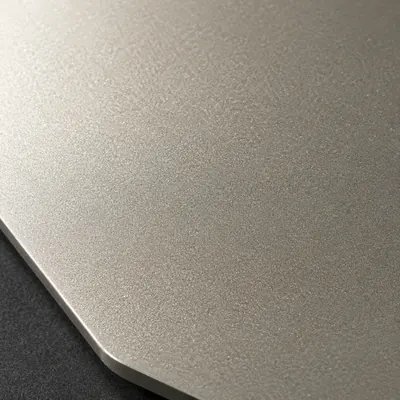
What makes a metallic finish
The effect comes from flake pigments — aluminium, mica or similar — that reflect light. In liquid paint the flakes float and orient in the wet film. In powder, the flakes have to travel through the spray gun, the booth and the reclaim system alongside the powder particles, and they do not always behave the same way.
Dry-blend: simple but sensitive
In a dry-blend the flakes are mixed with the finished base powder. It is quick to produce, but the flakes and the powder particles charge and fly differently. The result can be uneven appearance between parts, differences between first-pass and reclaimed powder, and a gradual change in effect as the reclaim ratio builds up.
Bonded: flakes attached to the particles
In bonded metallic powder the flakes are attached to the powder particles under controlled heat and mixing. Because they move together, the effect stays more consistent from part to part and through reclaim. POLYMER uses two dedicated bonding machines for metallic orders.
Specifying a metallic effect
Describe the target look with a physical reference part or panel rather than a colour code alone, because viewing angle and light change metallics dramatically. Tell the supplier your spray equipment, whether you reclaim, and the parts’ geometry. Approve the effect on panels sprayed under your conditions and keep that panel as the reference.
Outdoor metallics
For outdoor use, metallic effects should be built on a weather-resistant polyester. Check whether a project that requires a Qualicoat label also needs a metallic extension on the certificate.
Talk to our technical team
Send the part, environment, target colour and your oven conditions. We reply with a proposed system and a sample plan. Orders from 1,000 kg.
Send project details