 POLYMERPowder coatings
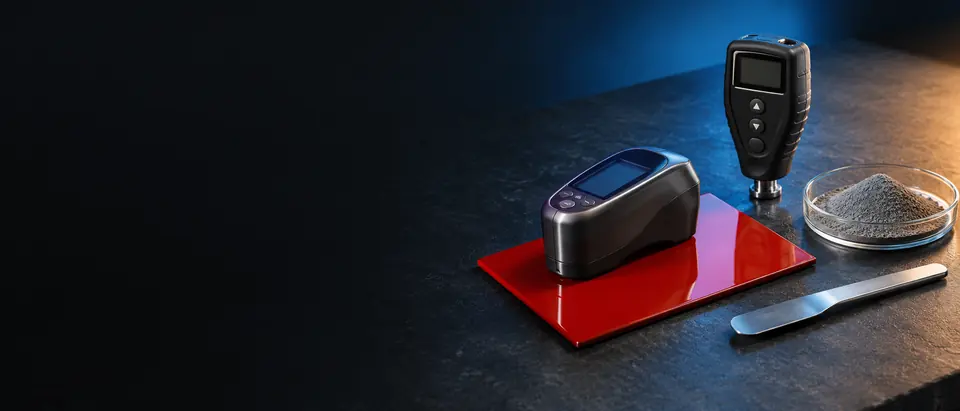
Powder coating questions, answered.
40 answers about POLYMER powder coatings: systems, colour and effects, orders and supply, certificates, samples, the company and distributor cooperation. Short answer first, then the detail and the page behind it.
POLYMER at a glance
- Company
- Fujian Polymer Industry & Trade Co., Ltd., Zhangzhou, China · founded 22 April 2019
- Systems
- Polyester (outdoor) · Epoxy-polyester hybrid (indoor decorative) · Epoxy (indoor functional) · standard & low-cure
- Finishes
- RAL & custom colours · 3 gloss bands · 10 surface effects · bonded metallics on 2 machines
- Supply
- 5,000 t/year · 8 production + 5 sampling lines · MOQ 1,000 kg · standard lead time within 10 days
- Approvals
- Qualicoat Class 1 · P-2199 (polyester PLM100611, to 31 Dec 2026) · ISO 9001:2015 · ISO 14001:2015 · SGS EU RoHS report
- Storage
- Cool and dry · stability tested 6 months below 30 °C · not dangerous goods for transport
- Contact
- sales@polymerpaints.com · +86 596 2600611 · WhatsApp +86 158 2472 9376 / +86 188 5021 3808 · reply within one working day
01 · 9 answers
Products & systems
Which powder coating system should I use for outdoor parts and which for indoor parts?
Use polyester for outdoor and UV-exposed parts. Use epoxy-polyester hybrid for indoor decorative parts and epoxy for indoor functional parts that need chemical resistance or hardness.
POLYMER supplies three thermosetting systems, and the choice is driven mainly by where the coated part will be used. Polyester is the weather-resistant system in our catalogue and is the one we recommend for architectural aluminium, outdoor furniture and lighting, air-conditioner housings, outdoor cabinets and agricultural machinery.
The epoxy-polyester hybrid gives good flow and gloss and is intended for indoor items such as appliances, steel furniture, shelving and indoor enclosures. Epoxy offers good chemical resistance, hardness and adhesion, and suits indoor functional parts such as safes, security doors, instrument housings and fitness equipment.
Neither epoxy nor hybrid should be specified for outdoor use. If one product range contains both indoor and outdoor parts, select the system part by part rather than using one powder for everything. Final suitability is confirmed on your parts, with your pretreatment and cure conditions.
Basis: POLYMER product catalogue (system descriptions and application areas). · Products →
Can epoxy-polyester hybrid powder be used outdoors?
No. Our hybrid powders are intended for indoor use and we do not specify them for outdoor or UV-exposed parts; use polyester instead.
Epoxy-polyester hybrids combine good flow, high gloss and good mechanical properties, and their heat and light stability is better than that of pure epoxy. That makes them a strong choice for appliances, steel furniture and indoor cabinets, but it does not make them an outdoor product.
The epoxy part of the binder is sensitive to UV light. Outdoors, hybrid coatings can lose gloss, chalk and change colour much sooner than a polyester designed for weathering. For that reason POLYMER does not recommend hybrid for exterior parts, even when the part looks well protected or is only partly exposed.
If a part may see sunlight, for example an outdoor cabinet, an air-conditioner housing or garden furniture, please tell us so we can propose a polyester powder in the colour and finish you need.
Basis: POLYMER product catalogue; general knowledge of epoxy UV sensitivity. · Hybrid →
When should I consider a low-cure powder coating?
Consider low-cure grades when your oven cannot reach or hold the standard cure, when heavy parts are slow to heat, or when you want to reduce oven energy or increase line speed.
All three POLYMER systems are available in standard-cure and low-cure grades. A low-cure grade reaches full cure at a lower metal temperature or in a shorter time than the standard grade; the actual schedule for each product is given on its TDS.
Typical reasons to consider low cure are: an oven that struggles to bring thick sections or mixed-mass loads up to temperature, a wish to reduce gas or electricity use, a need to run the line faster, and parts or assemblies that should not be exposed to higher temperatures.
Low-cure powders are more reactive, so storage temperature and stock rotation matter more. Before switching, measure your real metal temperature profile with an oven data logger and run a line trial, then confirm cure and appearance on representative parts.
Basis: POLYMER catalogue (cure grades); general powder coating practice. · Low-cure grades →
Why is epoxy powder for indoor use only, and why can it turn yellow?
Epoxy binders break down under UV light, so they chalk and discolour outdoors. They can also yellow if baked too hot or for too long.
Epoxy powders give strong adhesion, hardness and chemical resistance, which is why they are used for indoor functional parts. Their weakness is UV light: outdoors, the surface chalks and loses colour and gloss relatively quickly. POLYMER epoxy powders are therefore for indoor use only and should not be used directly outdoors.
Epoxy can also yellow in the oven. When the metal temperature is too high or the part stays in the oven too long, the film can turn yellow, which is most visible on whites and pale colours. Check that your oven profile matches the cure window on the product TDS, especially on lines with mixed part thicknesses.
Our epoxy powders are decorative and protective coatings for indoor parts. They are not fusion-bonded epoxy (FBE/3PE) pipeline coatings or heavy-duty anticorrosion systems.
Basis: POLYMER catalogue; general knowledge of epoxy coatings. · Epoxy →
What types of powder coatings does POLYMER make?
Three thermosetting systems: polyester for outdoor parts, epoxy-polyester hybrid for indoor decorative parts and epoxy for indoor functional parts, each in standard-cure and low-cure grades.
Every system is available in RAL and custom colours, three gloss bands (dead matt ≤ 10, satin and matt 11–80, high gloss ≥ 90) and ten surface effects, from smooth and sand texture to hammer tone, bonded metallic, transparent and fluorescent.
We recommend the system from where the part will be used, then match the colour and finish on a physical panel.
Basis: POLYMER product catalogue. · Products →
Which powder should I use for aluminium profiles and facades?
A weather-resistant polyester. For projects that require the Qualicoat label, we supply our Qualicoat Class 1 approved polyester system PLM100611.
Polyester is our outdoor system for aluminium windows, doors, curtain walls and architectural hardware. The Qualicoat approval (licence P-2199, valid until 31 December 2026) covers the approved system only, not every polyester product or colour.
Tell us the profile alloy, pretreatment, colour, gloss and whether the project specification names Qualicoat, and we confirm the right product before panels are made.
Basis: Qualicoat certificate P-2199; POLYMER catalogue. · Architectural aluminium →
Is your epoxy powder suitable for pipelines or heavy-duty anti-corrosion?
No. Our epoxy is a decorative and functional powder for indoor metal parts. We do not make FBE or 3PE pipeline coatings or heavy-duty anti-corrosion systems.
Pure epoxy gives very good adhesion, chemical resistance and electrical insulation indoors, but it chalks and yellows under UV, so it is not used for direct outdoor exposure.
If your part needs a specified anti-corrosion system, tell us the standard and environment and we will say honestly whether we can support it.
Basis: POLYMER catalogue; product scope. · Epoxy →
Do you supply powder for automotive parts and wheels?
Selectively. We evaluate automotive parts and wheels project by project. We do not hold IATF 16949.
For aftermarket wheels, accessories and non-critical parts we can propose a polyester or hybrid system and match the colour and metallic effect on panels.
If your customer requires IATF 16949 or an OEM approval, tell us at the start so you can decide whether a selective project makes sense.
Basis: POLYMER product scope. · Automotive parts & wheels →
Do you offer UL-listed or flame-retardant coatings for electrical enclosures?
No. We supply polyester for outdoor cabinets and hybrid or epoxy for indoor cabinets, but we do not offer UL-listed or flame-retardant powder.
For distribution boxes, control cabinets and energy-storage housings we match the colour, texture and gloss, typically RAL 7035 light grey in a fine texture.
If your enclosure specification requires UL or flame retardancy, those requirements need a supplier that holds them.
Basis: POLYMER product scope. · Electrical & energy enclosures →
02 · 6 answers
Colour, gloss & effects
Can you match a RAL colour or a colour from my own sample?
Yes. We match RAL colours and customer-specified colours from physical samples, in all three powder systems.
For RAL colours, the code is a starting point, but gloss, texture and film thickness all change how a colour looks. We therefore recommend sending a physical reference as well, such as a coated part, a panel or the powder you currently use.
For a custom colour, a physical sample is essential. Please tell us the system or environment (indoor or outdoor), target gloss band, finish or effect, substrate, typical film thickness and your cure conditions, and how you judge colour (light source, instrument or visual check).
We match the colour, prepare a panel and send it for your approval. Once you approve it, the panel is recorded as a version so later orders are produced to the same reference. Metallic and textured colours are always confirmed on physical panels, because they cannot be judged from a code alone.
Basis: POLYMER colour-matching process; general colour-matching practice. · Colours & finishes →
How do you make sure repeat orders match the colour I approved?
Each approved panel is recorded as a version with its system, colour, gloss, texture, film thickness and cure, and repeat orders are produced and checked against that version.
A colour is only meaningful together with the conditions it was made under. When you approve a panel, POLYMER records it as a version that links the powder system, colour, gloss, texture, film thickness and cure conditions.
Samples, trial orders and later bulk orders all refer to the same version. In production, each batch is checked in-house for colour, gloss and the other agreed properties before release, using the approved version as the reference.
On your side, keep your retained approved panel and apply the powder at similar film thickness and cure conditions; large changes in either can shift colour or gloss even when the powder is identical. If you want to change gloss, texture or system, we create a new version rather than modifying the old one, so the history stays clear.
Basis: POLYMER panel version management; in-house batch checks. · Quality & testing →
What gloss levels and surface effects do you offer?
Gloss bands are high gloss (≥90), satin/matt (11–80) and dead matt (≤10). Effects include smooth, sand, wrinkle, vein, fine texture, hammer tone, pattern, bonded metallic, transparent/translucent and fluorescent.
All three systems are available in a range of gloss levels: high gloss at 90 or above, satin and matt between 11 and 80, and dead matt at 10 or below. The exact target within a band is set to your requirement.
Surface effects include smooth, sand texture, wrinkle, vein (net) texture, fine texture, hammer tone, pattern finishes such as antique and art effects, bonded metallics, transparent and translucent powders, and fluorescent colours.
Not every combination exists in every system, so we confirm the system, colour and effect together. Textures and metallics are judged on physical panels and, ideally, on your parts with your spray equipment, because film thickness and application settings affect how they look. Tell us the end use and we will suggest suitable combinations.
Basis: POLYMER product catalogue. · Colours & finishes →
What is bonded metallic powder and why does it matter?
In bonded metallic powder the metallic pigment is attached to the powder particles, which reduces separation during spraying and recovery and helps keep the effect consistent.
Metallic and pearlescent effects come from flake pigments. If the flakes are simply dry-blended with the base powder, they can charge and travel differently from the powder particles. The result can be uneven appearance, differences between virgin and recovered powder, and drift in the effect as a job runs.
Bonding attaches the flakes to the powder particles under controlled heat and mixing, so they move through the gun and recovery system together. POLYMER has two metallic bonding machines for this.
Bonding reduces separation, but metallic effects still depend on application. Viewing angle, film thickness, gun settings and the ratio of recovered powder all influence the final look. We therefore confirm each metallic effect on physical panels and under your spraying conditions before bulk supply.
Basis: POLYMER equipment (2 bonding machines); general powder coating practice. · Metallic finishes →
Do you have RAL and Pantone colour cards?
Yes. We work from RAL K7 and Pantone references and can match other colour systems or a physical sample.
A colour code is a starting point; the physical panel is the reference. We send matched panels for approval and record the approved version for repeat orders.
Distributors can ask for colour cards and panels as part of the starter pack.
Basis: POLYMER catalogue. · Colours & finishes →
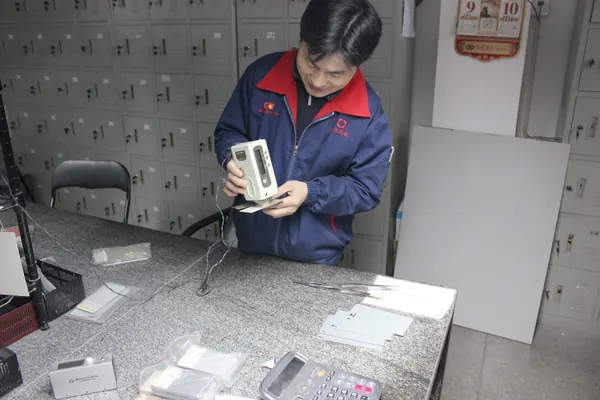
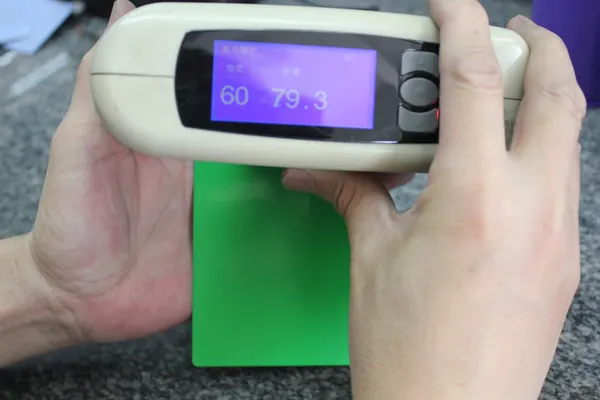
How do you measure gloss?
With a 60° gloss meter on cured panels, reported in three bands: dead matt ≤ 10, satin and matt 11–80, high gloss ≥ 90.
Gloss changes with colour, texture, film thickness and cure, so we agree the measuring condition and a physical reference with you for each project.
Basis: POLYMER quality control table. · Quality & testing →
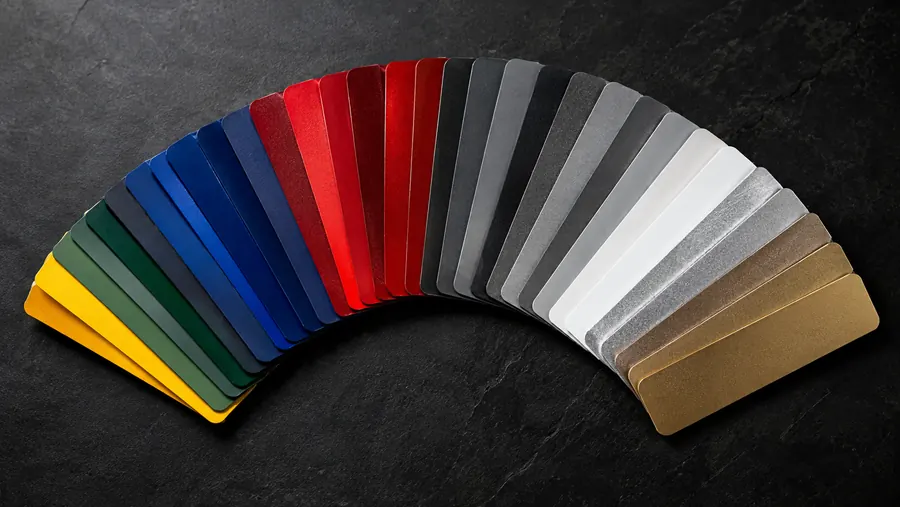
Colour library
Matched on a physical panel, not on a screen.
Colours & finishes03 · 8 answers
Orders, supply & shipping
What is the minimum order quantity for POLYMER powder coatings?
The minimum order quantity is 1,000 kg per order.
POLYMER works with importers and distributors, metal product manufacturers and coating applicators that have regular volume, so our MOQ is 1,000 kg per order. We do not accept one-off orders below that level.
When you send an enquiry, it helps to tell us the expected quantity, how it is split across colours and finishes, and how often you expect to reorder. This lets us plan production and confirm the order arrangement and lead time.
Smaller workshops whose orders are usually below one tonne are often better served through a local powder distributor. If you are a distributor, an initial order is typically built from a mix of standard colours and the effects your customers ask for most; we can discuss that mix with you before you order.
Basis: POLYMER commercial terms. · Contact →
What is your lead time for powder coating orders?
Standard lead time is within 10 days. Lead time for complex custom colours and large volumes is confirmed with each order.
With 8 production lines, 5 sampling lines and an annual capacity of 5,000 tonnes, POLYMER can usually produce a standard order within 10 days. This is the production lead time; sea or air freight to your country is additional and depends on the route and shipping schedule.
Some orders take longer and are confirmed individually: colours that need new matching work, special effects, and large orders that occupy several lines. In these cases we give you a confirmed date when the order details, approved panel and quantity are fixed.
For repeat orders of an approved colour, production is made to the recorded panel version, which avoids re-matching and helps keep the schedule predictable. Telling us your reorder pattern in advance makes planning easier on both sides.
Basis: POLYMER manufacturing data (capacity, lines, standard lead time). · About POLYMER →
How do I get a price quotation?
Send the part and substrate, where it is used, the system if known, colour and gloss, and your expected volume through the contact form or to sales@polymerpaints.com.
Our team replies within one working day, Monday to Saturday (UTC+8), with a proposed system and a sample plan. Prices are quoted per product and colour once the specification is clear.
Basis: POLYMER sales process. · Contact →
What payment terms do you accept?
Payment terms are agreed per order and confirmed in the quotation and pro-forma invoice.
Ask about payment terms when you request a quotation, together with the destination and the Incoterms you prefer.
Basis: POLYMER sales process. · Contact →
Which trade terms do you support, and do you handle export shipping?
Incoterms are confirmed per order. We are experienced with export documents, packing and sea freight to about 20 countries and regions.
Tell us the destination port or delivery address early, so documents, packing and freight can be prepared together with the samples and the first order.
Basis: POLYMER export experience. · About POLYMER →
Can I start with a trial before a large order?
Yes. The usual route is matched panels or sample powder, a trial on your own line, then a first order from 1,000 kg made to the approved version.
The approved panel, with its system, colour, gloss, texture, film thickness and cure, becomes the reference for every repeat order.
Basis: POLYMER sample and approval process. · Request a sample →
How much powder can you supply each month?
Our capacity is 5,000 t per year, up to 500 t per month, on 8 production lines plus 5 sampling lines.
Standard orders are usually produced within 10 days. Complex custom colours and large volumes have their lead time confirmed per order.
Basis: POLYMER company data. · About POLYMER →
How long can powder be stored, and how is it shipped?
Store powder cool, dry and ventilated. Storage stability is tested at 6 months below 30 °C; the SDS asks for storage below 35 °C. The powder is not classified as dangerous goods for transport.
Keep cartons closed and away from heat and direct sun, and let cold powder reach room temperature before opening. Low-cure grades are more sensitive to heat, so rotate stock first in, first out.
Packing format is confirmed with the quotation.
Basis: POLYMER quality control table; safety data sheet (2026). · How to store powder →
04 · 7 answers
Certificates & quality
What does Qualicoat Class 1 mean, and which POLYMER products does it cover?
Qualicoat Class 1 is the standard-durability approval level for powder coatings on architectural aluminium. At POLYMER it covers one polyester system, PLM100611, under licence P-2199.
Qualicoat is a quality label for coatings on aluminium used in architecture. Its Class 1 level is the standard-durability category. Higher durability classes exist, and POLYMER does not hold them.
The approval applies to our polyester system PLM100611, licence P-2199, gloss category 3. It does not include structured-texture or metallic extensions, and it does not extend to our other polyester products, to epoxy or hybrid powders, or to every colour we make. The current certificate is valid until 31 December 2026 and will be updated when renewed.
If your project requires a Qualicoat-approved powder, tell us the colour, gloss and finish so we can confirm whether it falls within the approved system. If a specification calls for a higher Qualicoat class, that is outside our current approval.
Basis: POLYMER Qualicoat certificate (licence P-2199) as stated in company records. · Quality & certificates →
What documents can you provide with your powder coatings?
On request we supply the product catalogue, technical and safety data sheets (TDS and SDS), ISO 9001 and ISO 14001 certificates, and the Qualicoat Class 1 certificate for polyester system PLM100611.
A product's TDS lists the product's properties, cure conditions and storage guidance, and its SDS covers safe handling and transport. Our catalogue describes the three systems, cure grades, gloss bands and effects. Colour cards and panels are available for evaluation.
Our ISO 9001 and ISO 14001 certificates cover our quality and environmental management systems. They are not product certifications. The Qualicoat Class 1 certificate (licence P-2199) applies only to polyester system PLM100611.
Test results we share come from our in-house testing and are not third-party reports. If your project needs an independent report or a specific certification, tell us early so we can confirm what is possible. We do not currently offer UL, IATF 16949 or food-contact approved products.
Basis: POLYMER certificates and document set. · Downloads →
What testing do you carry out in-house, and what are its limits?
Our in-house tests cover colour, 60° gloss, film thickness, particle size, salt spray, UV accelerated ageing, pencil hardness, impact, 180° bend, cross-cut adhesion and storage stability. These are internal tests; separately, an SGS report confirms EU RoHS compliance for a tested black powder sample.
We use these tests to develop and approve panels, check batches before release and support technical discussions with customers. Colour, gloss and particle size are used to keep batches consistent with the approved version; mechanical tests check that the film is flexible and adherent; salt spray and UV accelerated ageing are used to compare products under laboratory conditions.
These results have limits. They are produced in-house, not by an accredited third party. Accelerated tests indicate relative performance; they do not predict an outdoor lifetime in years. Results also depend on the substrate, pretreatment, film thickness and cure used, which may differ from your line.
For a project, we recommend testing on your own parts with your process. If an independent report is required, tell us at the enquiry stage.
Basis: POLYMER in-house test capability; general testing practice. · Quality & testing →
Which ISO certificates do you hold?
ISO 9001:2015 (No. 05326Q01777R001) and ISO 14001:2015 (No. 05326E01349R001), issued by Beijing NGV Certification Center and valid from 12 October 2026 to 11 October 2029.
The scope is the design, manufacture and sales of thermosetting powder coatings. These are management system certificates, not product approvals, and can be verified on the issuer's website, www.ngv.org.cn.
Basis: ISO 9001 and ISO 14001 certificates. · Quality & certificates →
Are your powder coatings RoHS compliant?
An SGS report (XMNEC26001081101, 12 May 2026) found a black powder sample compliant with EU RoHS (EU) 2015/863, with all ten restricted substances not detected.
The report covers the sample tested, not every colour or product. If your project needs a report for a specific colour, or for REACH or another regulation, tell us at the enquiry stage and we will confirm what can be arranged.
Basis: SGS test report XMNEC26001081101. · Quality & certificates →
What is your quality control process?
Every batch passes two checkpoints before packing: a production self-check after sieving and a laboratory test against the approved panel.
The laboratory checks colour with a colorimeter and light box, 60° gloss, film thickness, particle size, appearance, pencil hardness, impact, 180° bend and cross-cut adhesion. A batch that fails goes back to the formula and premix stage.
Basis: POLYMER production process and quality control table. · Quality & testing →
Which approvals do you not hold?
We do not hold Qualicoat Class 2 or Class 3, UL, IATF 16949 or food-contact approvals.
We state this plainly so your approval file stays clean. If a project needs one of these, tell us early and we will say whether we can help.
Basis: POLYMER certificates. · Quality & certificates →
05 · 3 answers
Samples & trials
How do I request a sample, and what should I send you?
Send us your part details, environment, target colour and finish, process conditions and expected volume, plus a physical colour reference where possible. We then propose a product and prepare a panel or sample.
A good sample starts with a clear brief. Please send: your company and contact; the part name, use, substrate and a photo; whether it is used indoors or outdoors and any humidity, coastal or chemical exposure; the colour code or a physical sample, gloss and effect; pretreatment, target film thickness, spray equipment and actual cure conditions; any standards or approvals the coating must meet; and your expected volume and colour structure.
If you are replacing an existing powder, its product name, technical data sheet and the problem you want to solve are also useful.
We use this to select the system, match the colour and prepare a panel or sample powder. After you test it on your parts, we agree any adjustments and record the approved version for production.
Basis: POLYMER sample and order process. · Request a sample →
What do I receive when I request a sample?
Panels sprayed in the matched colour and finish, or sample powder for a trial on your line, depending on what you need to evaluate.
Each panel is recorded with its system, colour, gloss, texture, film thickness and cure, so the version you approve can be reproduced. Product documents are sent with the sample on request.
Basis: POLYMER sample process. · Request a sample →
Why should I run a line trial before ordering?
Because your pretreatment, spray equipment, film thickness and oven decide the final result as much as the powder does.
Spray the sample on real parts, measure the actual metal temperature with an oven data logger and check appearance, adhesion and impact against your own acceptance criteria.
Basis: General powder coating practice. · How to run a line trial →
06 · 4 answers
Company & export
Who is POLYMER?
Fujian Polymer Industry & Trade Co., Ltd. is a thermosetting powder coating manufacturer founded on 22 April 2019 in Zhangzhou, Fujian, China.
We have a technical research lab, a QC lab and a sample development room, and are recognised as a National High-Tech Enterprise and a Fujian “Specialised, Refined, Distinctive and Innovative” SME. Sales offices in China cover Fuzhou, Quanzhou, Xiamen, Longyan, Guangdong and Zhejiang.
Basis: Business licence; company records. · About POLYMER →
Which countries do you export to?
About 20 countries and regions across Russia and Europe, Latin America, the Middle East and Africa, and South and Southeast Asia.
They include Russia, Latvia, Turkey, Mexico, the Dominican Republic, Colombia, Peru, Brazil, Chile, Saudi Arabia, the UAE, Oman, Lebanon, Kenya, Nigeria, Sri Lanka, Vietnam, Thailand, Malaysia and Indonesia.
Basis: POLYMER export records. · About POLYMER →
What production equipment and laboratory do you have?
Premixers and cone mixers, twin-screw extruders, grinding and sieving mills, 2 metallic bonding machines, and an in-house laboratory.
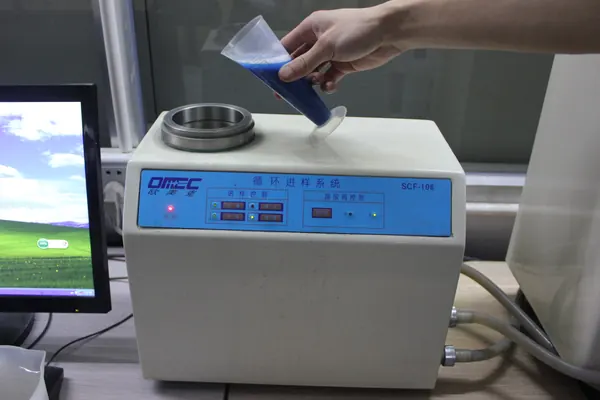
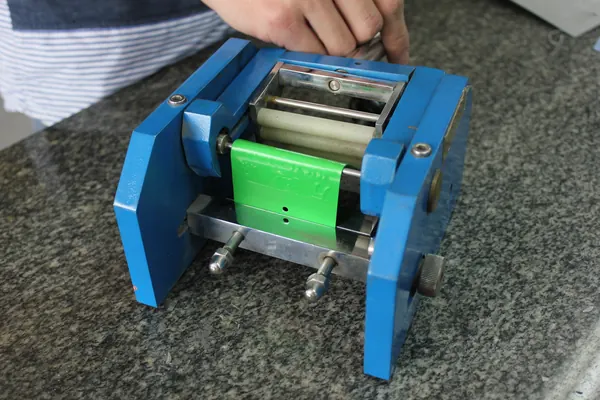
The laboratory has a colorimeter and standard light box, gloss meter, film thickness gauge, laser particle size analyser, salt spray chamber, UV accelerated weathering tester, pencil hardness, impact and bend testers, and an oven temperature data logger.
Basis: POLYMER equipment list. · Inside the factory →
How quickly do you reply, and can I use WhatsApp?
Within one working day, Monday to Saturday (UTC+8).
Email sales@polymerpaints.com, call +86 596 2600611, message us on WhatsApp at +86 158 2472 9376 or +86 188 5021 3808, or use the contact form. A described part gets a proposed system and a sample plan in the first reply.
Basis: POLYMER sales process. · Contact →
07 · 3 answers
Distributors & importers
How does POLYMER work with distributors and importers?
We start on a non-exclusive basis and discuss regional cooperation once there are sales results, with customer ownership agreed clearly.
Powder importers and distributors are POLYMER's main customer type, and we export to about 20 countries and regions. A new partnership normally begins non-exclusively. As sales develop, we discuss regional terms based on actual results.
We agree customer ownership with you at the start, so that both sides know who looks after each end user. We share the catalogue, certificates, colour cards and panels, and the application limits of each system, so that your team can match products to end users without over-promising.
A first order is usually built from the three systems: polyester for outdoor and architectural work, hybrid for indoor decorative parts, epoxy for indoor functional parts, together with common RAL colours, textures and effects, and colours matched to customer samples. The MOQ of 1,000 kg per order applies.
Basis: POLYMER channel cooperation policy. · Distributors →
Can I become an exclusive distributor?
We start non-exclusive, then discuss regional terms once repeat orders and end-user trials show results.
Tell us your market, the end users you serve and your expected monthly volume, and we propose a first range.
Basis: POLYMER distributor programme. · Distributors →
What is in the distributor starter pack?
The product catalogue, certificates, colour cards and coated panels, so you can present the range to applicators and manufacturers.
We then support end-user screening and sample trials: you bring the part, we match the colour and record the approved version.
Basis: POLYMER distributor programme. · Distributors →
No question matches your search. Ask our team
When to talk to our team directly
Some answers depend on your part.
- Volume pricing and annual supply
- Projects that name Qualicoat or another specification
- Custom colours, textures and metallic effects from your sample
- Distributor ranges and regional terms
- Documents for a tender or supplier approval file