 POLYMERPowder coatings
1. Define what you are buying
List the systems you need (polyester, hybrid, epoxy), the colours and effects your customers ask for most, and which ones are outdoor. Separate the standard range from difficult items such as bonded metallics, fine textures or low-cure grades; those are where suppliers differ most.
2. Ask for panels, not just a colour card
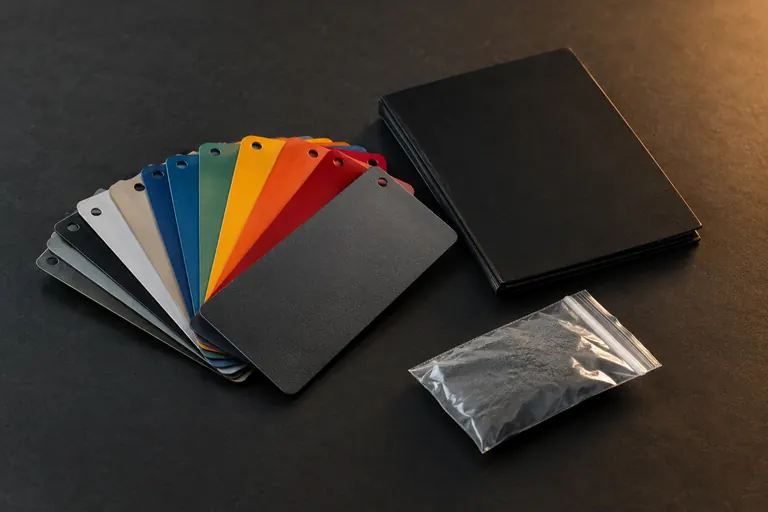
A printed card shows a colour; a sprayed panel shows colour, gloss, texture and film behaviour together. Ask for panels matched to your physical reference, sprayed and cured, with the system, gloss and film thickness written on them. Then spray the sample powder on your own line, because pretreatment and ovens change the result.
3. Make the approved panel the contract
Once a panel is approved, the supplier should record it as a version: system, colour, gloss, texture, film thickness and cure. Every batch is then checked against that reference before shipment, and any change — a new colour, part or condition — becomes a new version rather than a silent change. Ask how the supplier does this before the first order.
4. Read certificates for their scope
Certificates are useful only when you know what they cover. A Qualicoat approval applies to the named system and licence, not to every product or colour. ISO 9001 and ISO 14001 certify management systems, not products. Third-party test reports apply to the sample tested. Ask for the certificate itself and check the licence number, validity and scope.
5. Collect the documents your market needs
At minimum: technical data sheets with cure conditions and storage guidance, safety data sheets, and the relevant certificates. If your customers ask for restricted-substance compliance such as EU RoHS, ask which products and colours a report covers, and whether a report for your colour can be arranged.
6. Agree MOQ, lead time and replenishment
Clarify the minimum order per order and per colour, the standard lead time, and which items take longer. A distributor’s first order is usually a mix of fast-moving standard colours and a few effects. Plan replenishment around the supplier’s real lead time plus sea freight, not the best case.
7. Plan packing, storage and shipping
Powder is sensitive to heat and humidity. Confirm the packing format, storage stability and recommended storage temperature, and whether the product is classified as dangerous goods for transport. Tell the supplier your destination port early so documents and freight are prepared with the order.
8. Start small, then scale
A sensible sequence is panels, a line trial, a first order at the supplier’s MOQ, then regular replenishment once results are stable. Exclusive territories are usually discussed after the first repeat orders, not before.
Talk to our technical team
Send the part, environment, target colour and your oven conditions. We reply with a proposed system and a sample plan. Orders from 1,000 kg.
Send project details