 POLYMERPowder coatings
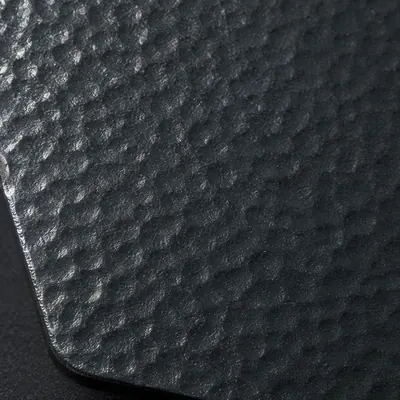
The main textures
| Look | Typical use | |
|---|---|---|
| Sand texture | Fine, even grain like fine sandpaper | Electrical cabinets, enclosures, office furniture |
| Fine texture | Very dense micro-texture, soft-touch matt | Furniture, housings, consumer products |
| Wrinkle | Continuous soft ridges, like crinkled leather | Equipment, tools, instrument cases |
| Vein | Irregular network of raised veins over a base tone | Decorative metal, hardware |
| Hammer tone | Shallow dimples with a metallic highlight | Machinery, tools, decorative parts |
Why textures vary between batches and lines
Texture depends on film thickness, oven profile and spraying conditions as much as on the powder. Thicker films usually give coarser texture; faster heat-up can change wrinkle and vein patterns; reclaimed powder can shift texture slightly. A texture approved at one film thickness may look different at another.
How to keep texture consistent
Approve the texture on a panel sprayed at your normal film thickness and cure, and record both with the approved version. Keep a physical reference at the line. Control the reclaim ratio, and check new batches against the reference panel before full production. Our guide on consistent textures goes step by step.
Textures and outdoor use
Any texture can be produced on a weather-resistant polyester for outdoor parts. Note that Qualicoat approvals may exclude structured textures unless the certificate includes that extension.
Talk to our technical team
Send the part, environment, target colour and your oven conditions. We reply with a proposed system and a sample plan. Orders from 1,000 kg.
Send project details