 POLYMERPowder coatings
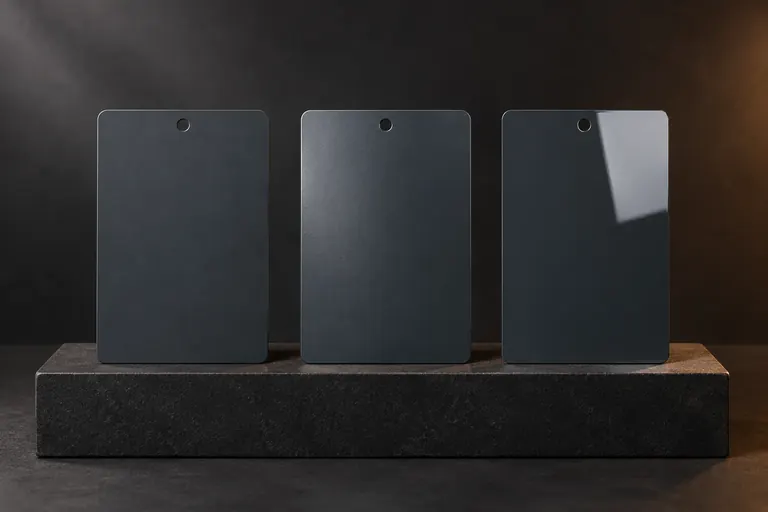
Start with the environment, not the price
Thermosetting powder coatings for metal fall into three families that cover most industrial and decorative work: pure polyester, pure epoxy and epoxy-polyester hybrid. They can all be made in the same RAL colours, gloss bands and textures, so on a sample shelf they can look identical. The difference shows up later, when the part meets sunlight, chemicals or heat.
If the part is used outdoors or is exposed to UV through a window, the choice is polyester. If it stays indoors, the choice is between hybrid for decorative parts and epoxy for functional parts that need chemical resistance, hardness or electrical insulation.
The three systems side by side
| Polyester | Epoxy-polyester hybrid | Epoxy | |
|---|---|---|---|
| Use | Outdoor and UV-exposed | Indoor, decorative | Indoor, functional |
| Strength | Weather and UV resistance, good edge coverage, impact resistance | Smooth flow, high gloss, good mechanical properties, better heat and light stability than epoxy | Adhesion, hardness, chemical resistance, electrical insulation |
| Limitation | Lower chemical resistance than epoxy | Not for direct outdoor use | Chalks and yellows under UV; not for outdoor use |
| Typical parts | Aluminium profiles, outdoor furniture and lighting, air-conditioner housings, agricultural machinery | Appliances, steel furniture, shelving, indoor cabinets, light fittings | Safes, security doors, instrument housings, fitness equipment, indoor equipment |
Why epoxy should stay indoors
Epoxy resin gives excellent adhesion and chemical resistance, but its aromatic structure absorbs UV. Outdoors the surface chalks and the colour shifts, often within a single season for bright shades. Over-baking or long cure times also push epoxy towards yellow, which matters for whites and pale colours even indoors.
This is why a part that might end up outdoors, or a product range that mixes indoor and outdoor items, is safer on polyester. One powder for everything usually means the wrong powder for some of the parts.
Where hybrid fits
Hybrid combines epoxy and polyester resins. It keeps much of epoxy’s mechanical performance while improving flow, gloss and resistance to yellowing. For appliances, shelving and indoor furniture it is often the most economical way to get a smooth, attractive film. It should not be specified for outdoor use.
Standard cure or low cure?
All three systems can be supplied in standard-cure and low-cure grades. Low-cure grades help with heavy parts, heat-sensitive assemblies or energy saving, but they are more reactive in storage and need a measured metal-temperature profile on your oven. Read our guide on checking cure before you switch.
How to specify your choice
Send the supplier the part, the substrate and pretreatment, where it will be used, the target colour and gloss, and your oven conditions. A good supplier will confirm the system on panels sprayed on your line rather than from a data sheet alone, and will record the approved panel so repeat orders can be checked against it.
Talk to our technical team
Send the part, environment, target colour and your oven conditions. We reply with a proposed system and a sample plan. Orders from 1,000 kg.
Send project details